

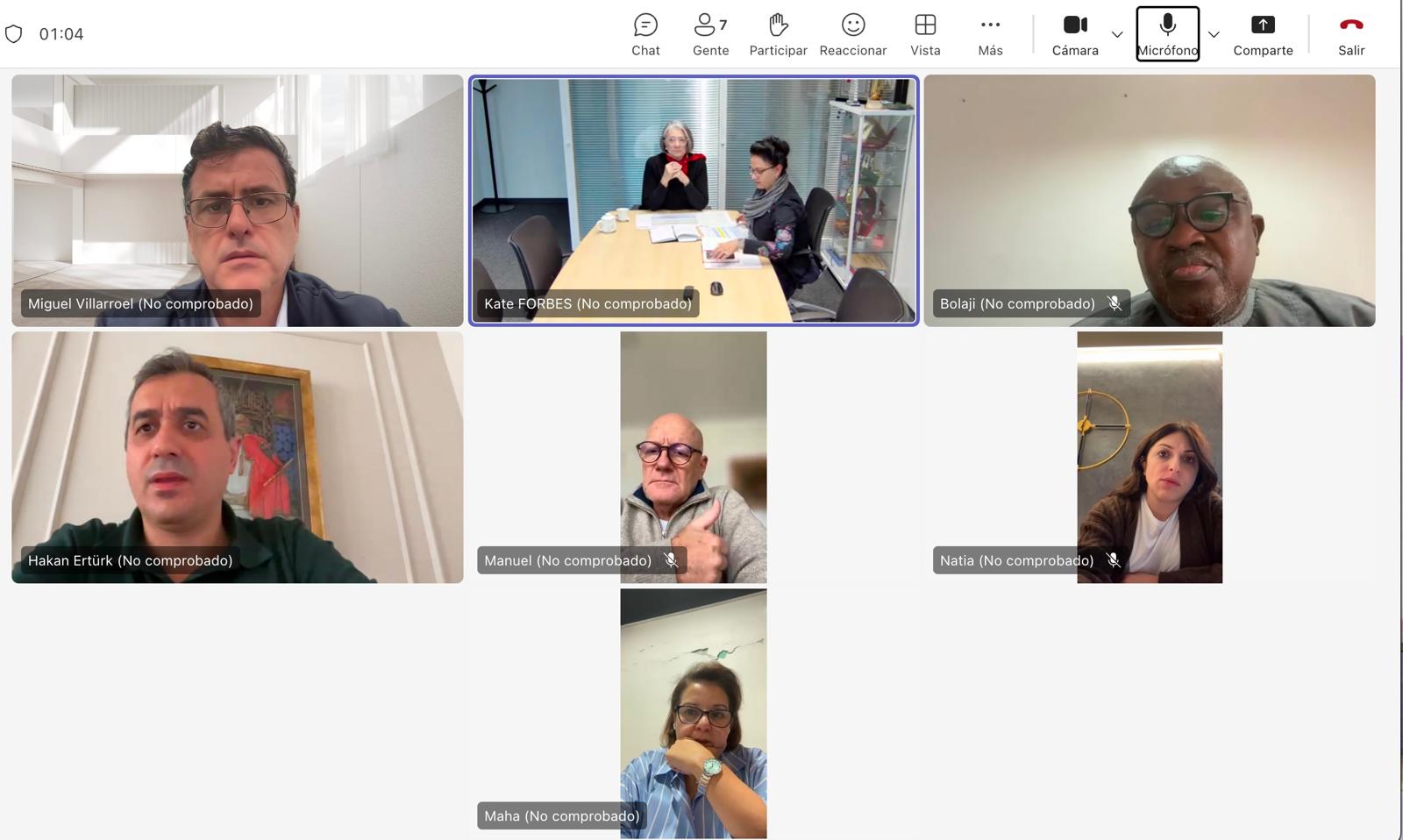
On October 27, 2025, a strategic virtual meeting was held between the President of the International Federation of Red Cross and Red Crescent Societies (IFRC), Ms. Katherine Forbes, and her Vice Presidents. This virtual meeting aimed to strengthen international cooperation and coordination among the National Societies within the Federation.
Key Participants
Various IFRC authorities representing different regions of the world participated in this session, ensuring a broad global perspective:
- Katherine Forbes – President of the IFRC
- Dr. Miguel Villarroel – Vice President for America
- Natia Loladze – Vice President for Europe (virtual participation)
- Elder Boliji Akpan Anami – Vice President for Africa
- Maha Barges Al-Barges – Vice President for Asia (virtual participation)
- Manuel Bessler – Vice President ex officio, Switzerland
Main Meeting Topics
During the meeting, specific and relevant issues faced by the National Societies were addressed, seeking joint solutions and strategies:
- Assessment and Situational Analysis: Review of humanitarian challenges in different regions.
- Strengthening Coordination: Improving communication and collaboration mechanisms between national societies.
- International Cooperation: Promoting strategic partnerships for a more efficient humanitarian response.
- Action Plans: Defining clear objectives for the upcoming months in each region.
The Importance of Global Cooperation
The International Federation of Red Cross and Red Crescent Societies is a key organization in the global humanitarian response. This type of meeting facilitates:
- Synchronization of efforts in emergencies and disasters.
- Sharing of knowledge and best practices.
- A coordinated and effective response that maximizes positive impact on affected communities.
Conclusion
The virtual meeting on October 27, 2025, underscores the IFRC’s ongoing commitment to strengthening international cooperation and the global humanitarian response. Collaboration between the President and Vice Presidents is essential to achieve a significant impact on the societies that depend on their support.
Continued joint work ensures that National Societies are better prepared to face current and future humanitarian challenges.